How to increase the average check in a restaurant without pushing guests
Adding ARS 2,000 per guest is often easier than finding new guests. The levers that work and how to measure them.
Knowing how to increase the average check in a restaurant is one of the cheapest ways to sell more: you don’t need more tables or more ads, just a little more from each guest who is already inside. Done right, guests leave happier, not feeling upsold.
What the average check is and how to calculate it
It’s total sales divided by the number of checks. In hospitality it pays to track it per guest too: a table of four always has a big check, and that says nothing about what each person spends.
ARS 18k
check per guest, example
+ARS 2k
one more drink or dessert
+ARS 6M
a month at 100 covers a day
The math is an example: 100 guests × ARS 2,000 × 30 days. But the logic holds anywhere: a small increase multiplied by every cover in the month outweighs a one-off promo.
6 ways to increase your average check
- Specific suggestions. Not “anything else?”, but something that goes with what they ordered.
- Add-ons on every dish. Fried egg, cheddar, rustic fries: ARS 1,500–3,000 extras people add without much thought.
- Combos with visible savings. Guests add a drink or dessert because they see what they save. More in how to build combos.
- Well-presented drinks. Wine by the glass, house lemonade, specialty coffee: often the best margins on the menu.
- Dessert and coffee before the bill. Offer them when clearing plates, not after guests ask to pay.
- Sharing plates. A grilled provolone for the table lifts everyone’s check.
Suggestive selling: what to say and what not to
Suggestion that annoys
- “Anything else?”
- Always pitching the priciest item
- Pushing after a no
- Dessert to someone who asked for the bill
Suggestion that sells
- “The house Malbec goes great with the steak”
- Something that pairs with the dish
- One suggestion per moment, then stop
- Dessert when clearing plates
On a packed Friday, servers can’t make a suggestion at every table. That’s why it helps when the menu does part of the job.
POSMI
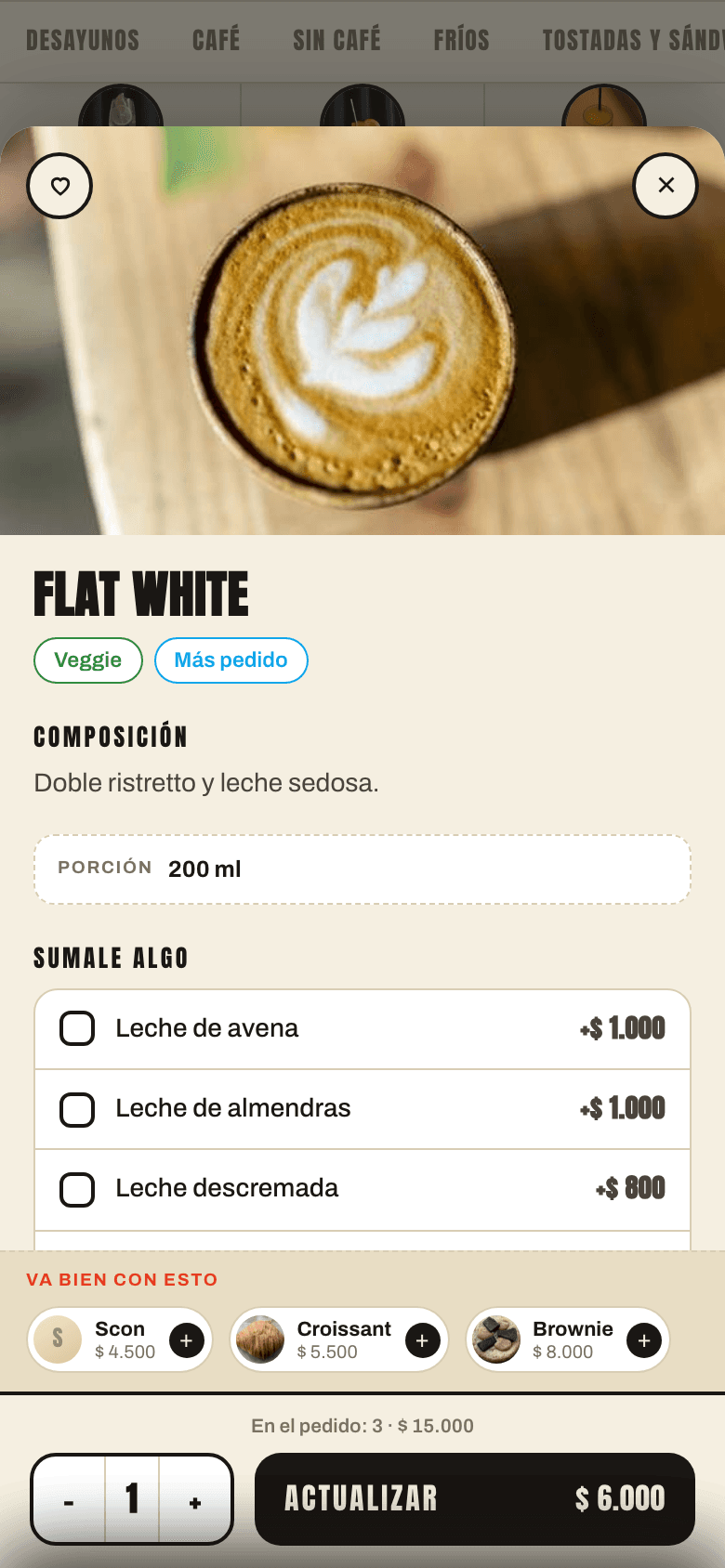
A menu that suggests on its own
In a QR menu, every dish can show what pairs with it, right when the guest is deciding.
- “Goes well with…” on the dish card
- “We also recommend” in the cart
- Combos with the savings in pesos
Menu design raises the check too
The dishes you most want to sell go at the top of each section, with a photo and a description that makes people hungry. Which ones they are is what menu engineering tells you, by crossing each dish’s popularity and margin.
Common mistakes
- Raising prices and calling it “raising the check”: the number goes up, but fewer guests may come.
- Measuring per table, not per guest.
- Blanket discounts: they cut the check exactly when you want it to grow.
- Not measuring: check the number weekly and compare before and after each change.
How do you calculate a restaurant’s average check?
Divide total sales for a period by the number of checks. For a more useful figure, divide by the number of guests served: that’s your check per cover.
What is a good average check for a restaurant?
There’s no universal number: it depends on the concept, the area and the time of day. What matters is comparing yourself with yourself, week after week.
Does suggestive selling annoy guests?
It does when it’s generic or pushy. A specific suggestion that pairs with what they chose is usually taken as a recommendation.
- #average check
- #upselling
- #combos
- #menu design
- #QR menu